Meet Margo & Myrtle
SWFLSTR’s Ambassador Diamondback Terrapins
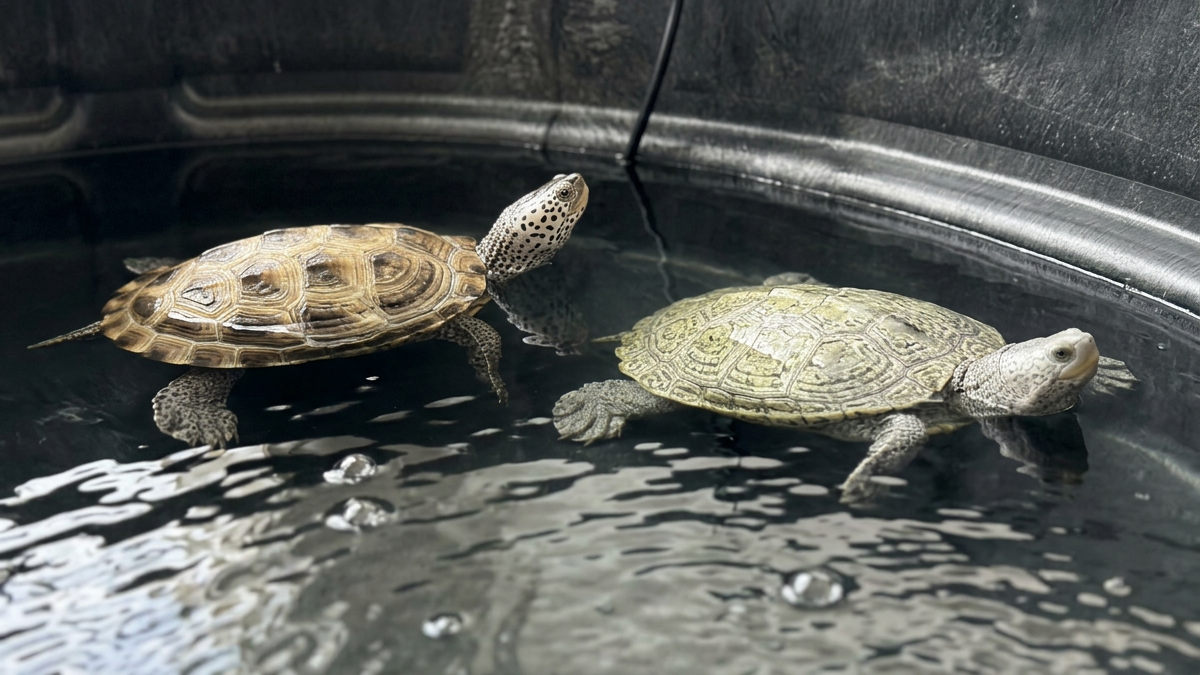
Margo and Myrtle are Southwest Florida Sea Turtle Rescue's resident diamondback terrapin education ambassadors. These two adult females help us introduce children, families, and community members to one of Florida's unique coastal turtles while opening conversations about wildlife conservation and the importance of protecting healthy coastal ecosystems.
Through select educational programs and community events, Margo and Myrtle help turn conservation education into something people can see, remember, and connect with.
Diamondback terrapins are turtles—but they aren't sea turtles. Keep reading to meet Margo and Myrtle and discover what makes their species so unique.
Meet The Girls
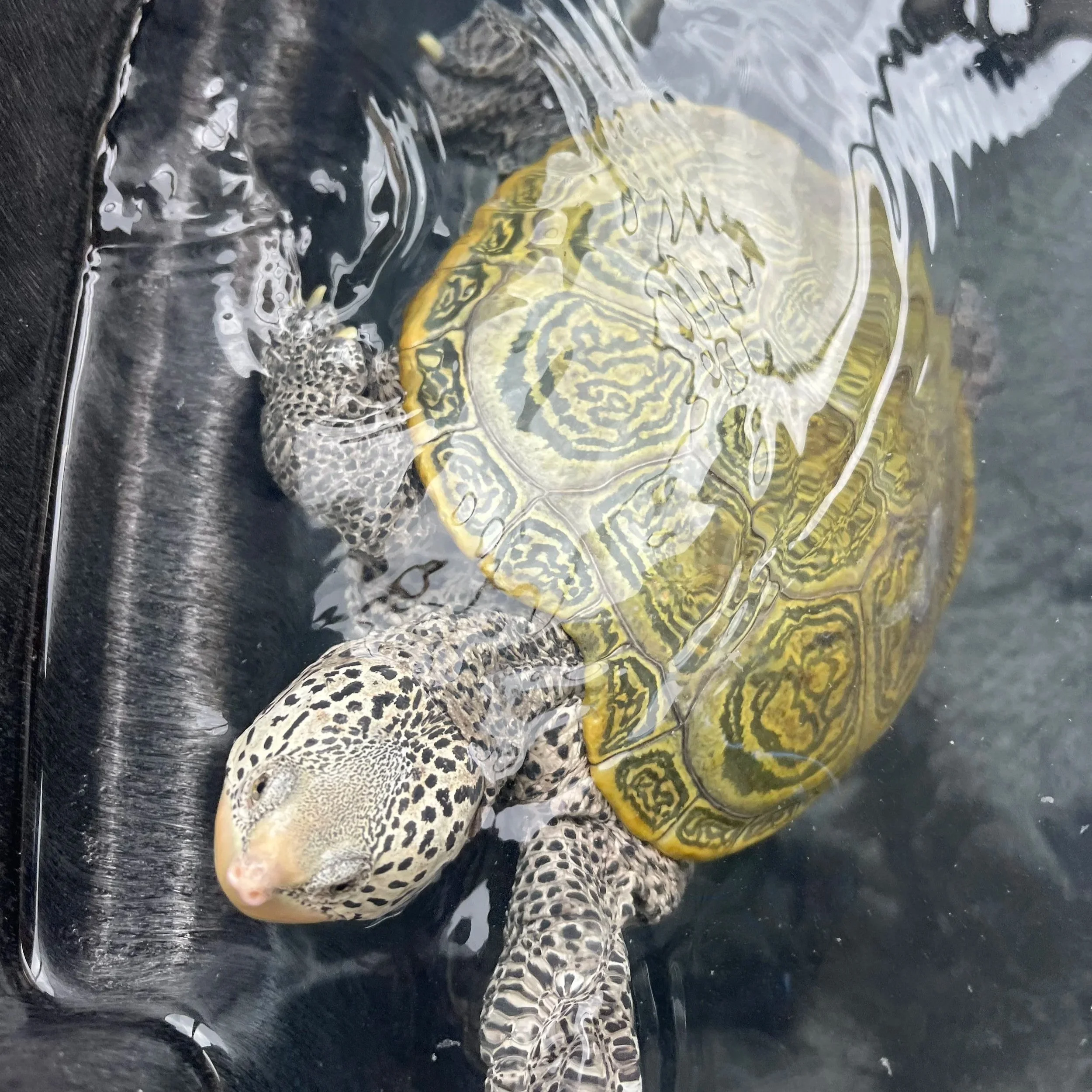
Margo
“Big Mama”
Diamondback Terrapin
Malaclemys terrapin
Sex: Female
Margo is the outgoing one of the pair—and she rarely misses an opportunity to see what’s going on. Friendly, curious, and always interested in food, she regularly swims over to greet her caretaker and seems determined to keep track of whatever is happening around her enclosure.
She spends plenty of time looking beyond her habitat, watching people and studying the activity around her. Margo’s curious personality and willingness to come right over make her a natural attention-grabber during educational interactions.
Margo in three words: Friendly • Curious • Hungry
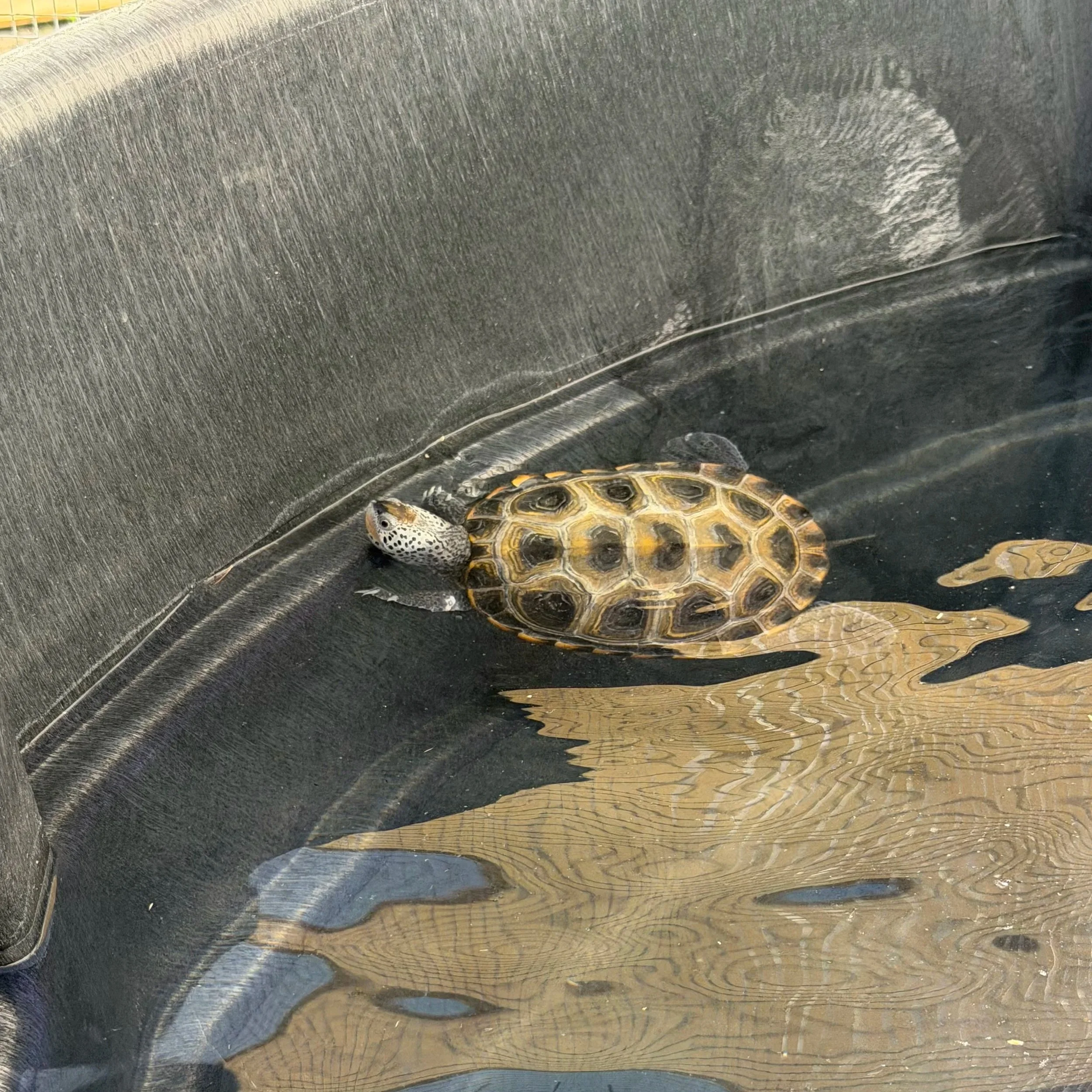
Myrtle
“The Feisty One”
Diamondback Terrapin
Malaclemys terrapin
Sex: Female
Myrtle prefers to observe the world on her own terms. She's much more reserved than Margo and often watches what's happening from a comfortable distance rather than swimming over to investigate.
But don't mistake shy for timid—Myrtle has plenty of attitude. When handled, she's quick to make her displeasure known, often greeting the situation with an open mouth and a very clear warning that she'd rather be left alone.
One of her favorite activities is basking on her ramp, where she can regularly be found soaking up the warmth.
Myrtle in three words: Shy • Feisty • Independent
Same Species. Very Different Personalities.
Spend enough time around Margo and Myrtle, and one thing becomes obvious: individual animals can behave very differently from one another.
Margo is usually eager to investigate what's happening around her, while Myrtle tends to observe from a distance and prefers a little more personal space. Their different personalities give us another opportunity to teach an important lesson about wildlife: animals are individuals, and their behavior and boundaries should be respected.
What is a Diamondback Terrapin?
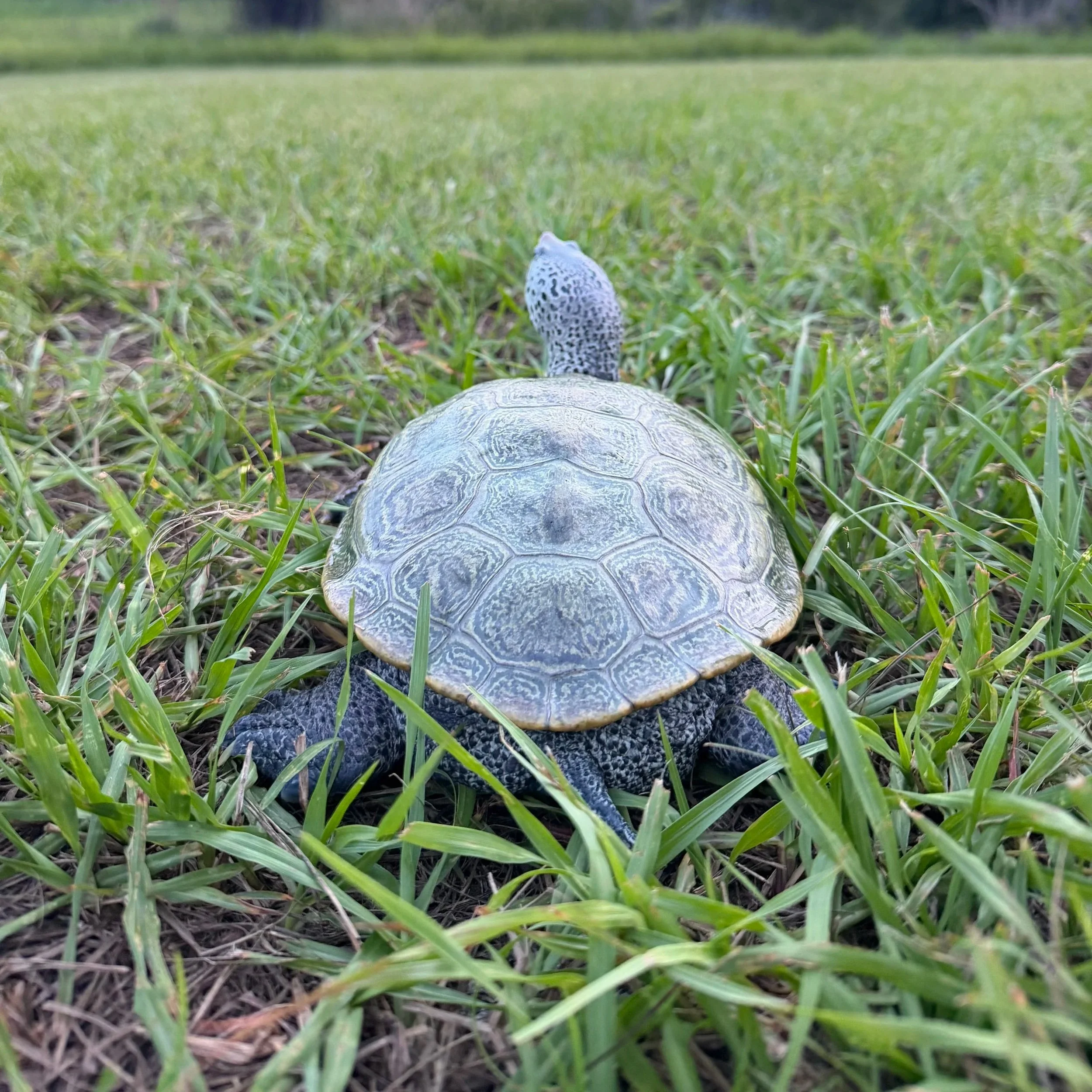
What’s in a Name?
The name “diamondback” comes from the distinctive concentric, diamond-like patterns often visible on the scutes of their shells.
No two terrapins look exactly alike. Their shells can vary considerably in color and pattern, while their skin is often gray to pale with dark spots or markings. Some individuals can even show pink coloration around the cheeks.
Common Name: Diamondback Terrapin
Scientific Name: Malaclemys terrapin
Type: Reptile — Turtle
Habitat: Brackish coastal and estuarine environments
Diamondback terrapins are medium-sized turtles specially adapted to life along the coast. Unlike sea turtles, which spend most of their lives in marine environments, or many familiar turtles that live primarily in freshwater, diamondback terrapins are closely associated with brackish water—the mixture of fresh and salt water found where rivers, bays, marshes and other coastal environments meet the sea.
In Florida, terrapins inhabit salt marshes, barrier islands, mangrove swamps, tidal creeks, rivers and other brackish coastal habitats.
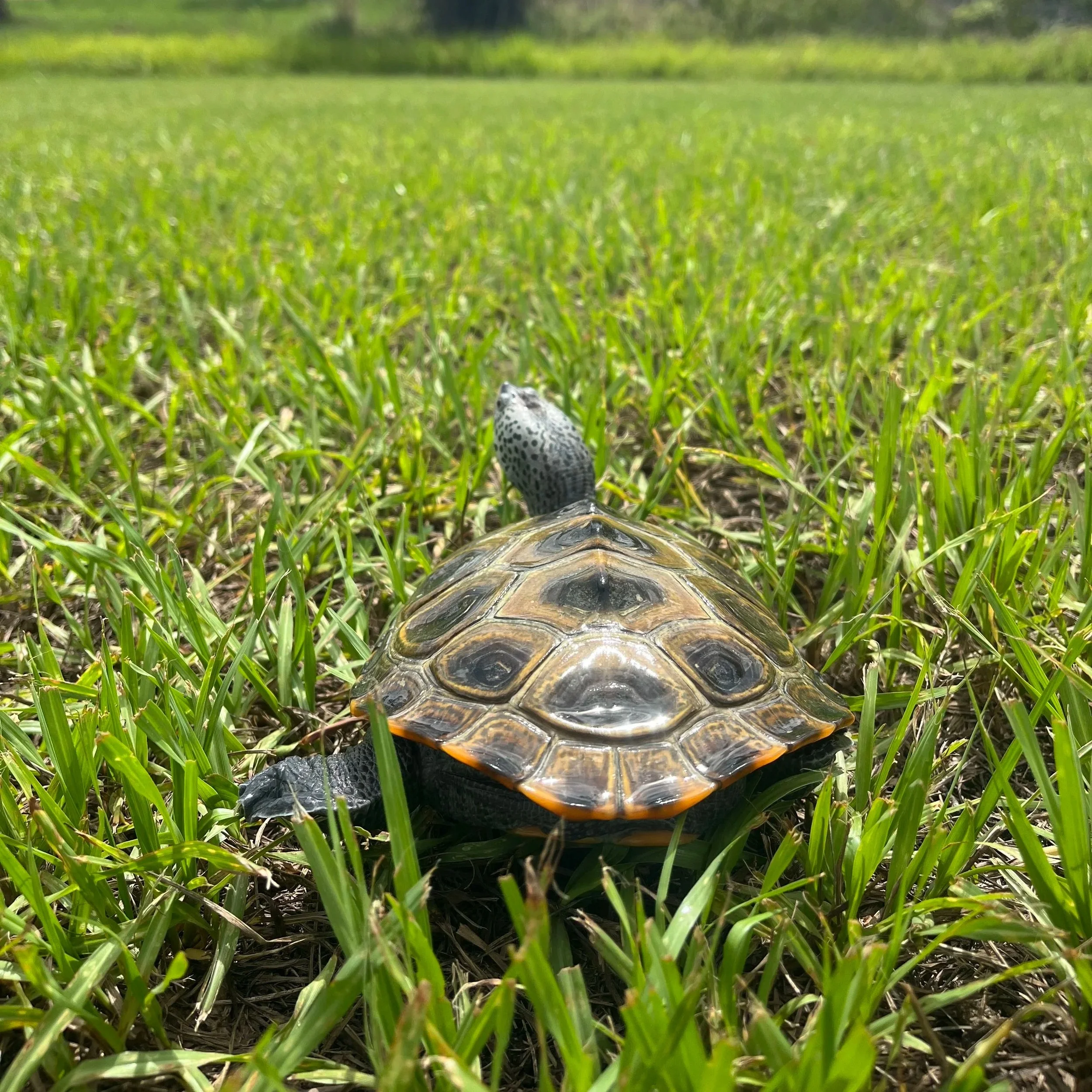
Terrapin or Sea Turtle?
They’re both turtles - but their lives are very different.
Diamondback Terrapins
Live primarily in brackish coastal environments such as marshes, mangroves and tidal waterways.
Sea Turtles
Are marine reptiles adapted to life in the ocean and come ashore primarily when females nest.
That difference makes terrapins a wonderful way to teach about the connections between land, freshwater and marine ecosystems. Protecting coastal wildlife isn't only about protecting individual species—it also means protecting the habitats that connect them.
Built for Coastal Life
Diamondback terrapins spend much of their time in and around brackish water. During daylight hours, they may bask, swim, forage, hide among vegetation or spend time submerged in muddy areas.
They're also opportunistic eaters. Wild diamondback terrapins consume foods including snails, crabs, clams, mussels, worms, fish and plant material.
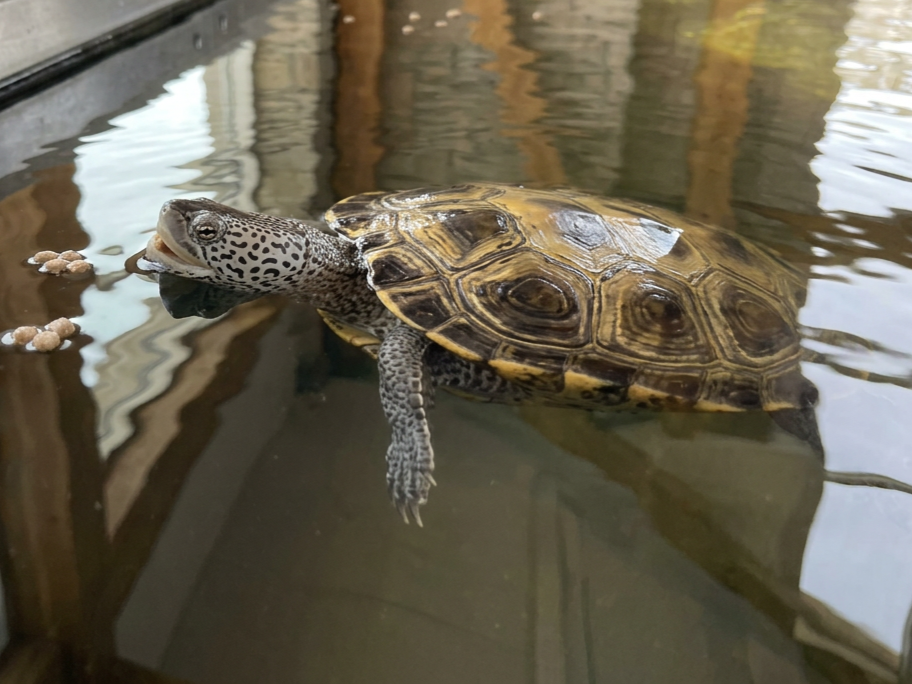
Girls Are Bigger!
Margo and Myrtle are both females—and female diamondback terrapins are considerably larger than males.
FWC reports adult females at about 9.4 inches in shell length, compared with approximately 5.5 inches for males. Females also mature later, generally around four to five years of age in Florida, while males may mature around two to three years.
Life As A Terrapin
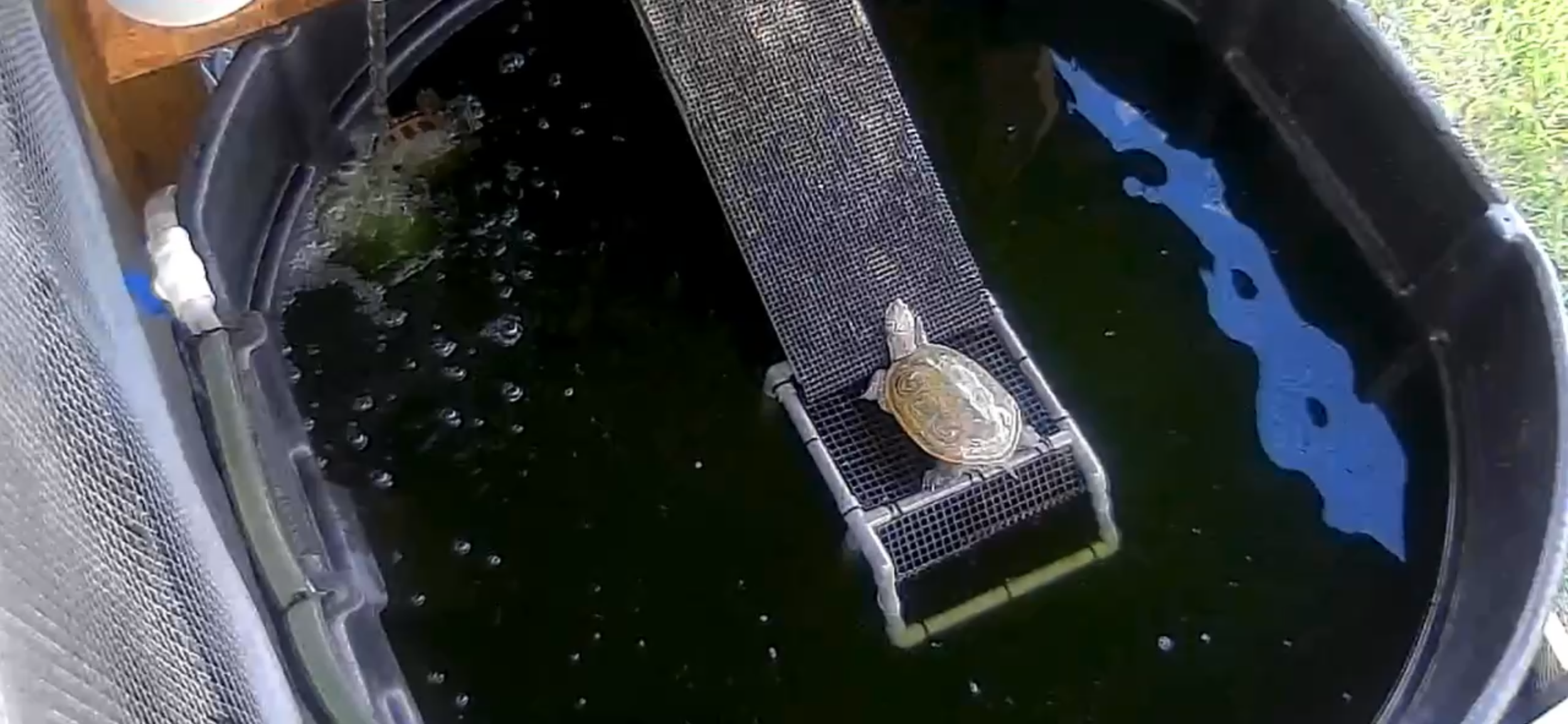
Florida diamondback terrapins are generally active during the day for much of the year. Courtship typically occurs during spring, and nesting generally takes place from April through July, although timing can vary by location.
Females leave the water to find suitable nesting areas, typically selecting sandy areas above the high-tide line. A female may produce multiple clutches in a year, with approximately five to ten eggs in a clutch.
Diamondback terrapins can be long-lived animals. Scientists estimate that they commonly live around 25 years in the wild, while individuals have lived as long as approximately 40 years in captivity.
Diamondback Terrapins in Florida
Florida is especially important for diamondback terrapins.
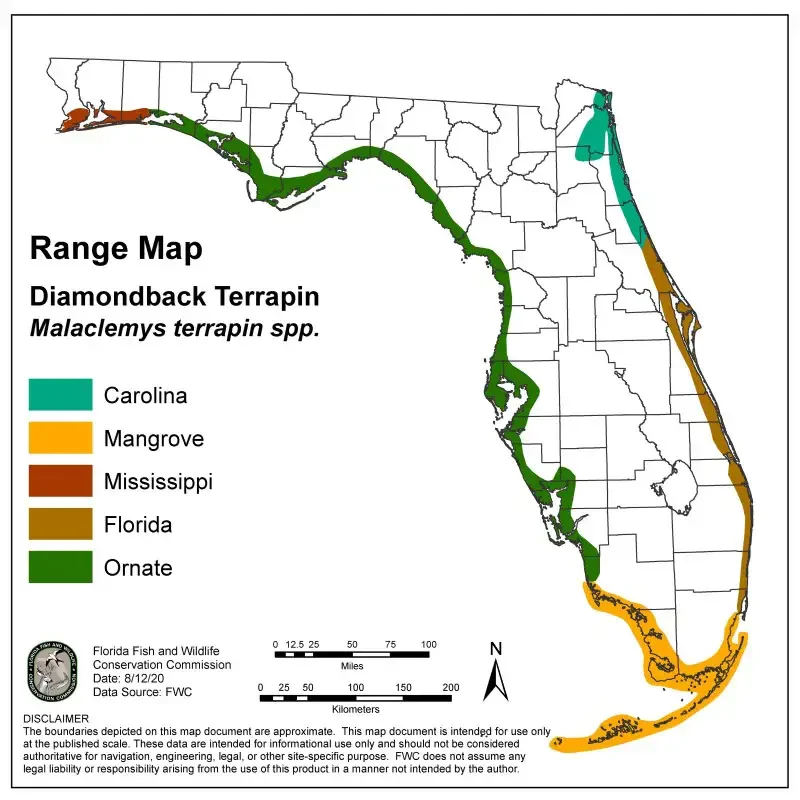
Five recognized diamondback terrapin subspecies occur in the state, and three are found nowhere else in the world. Florida's coastline represents approximately 20% of the species' total range.
Southwest Florida is an especially interesting area for terrapin research. Historically recognized subspecies ranges overlap or transition in this region, and ongoing genetic research is helping scientists better understand Florida's terrapin populations and whether traditional subspecies classifications accurately reflect their genetics.